


The day I blacked out in a crowded local train in Kolkata, a day I had looked forward to for months, eager to spend time with my loved ones before leaving again was when I realised my body had begun responding to my struggles. As doctors and nurses rushed around me in the hospital in my home district, closing the curtains, I felt myself slipping into an unfamiliar darkness.
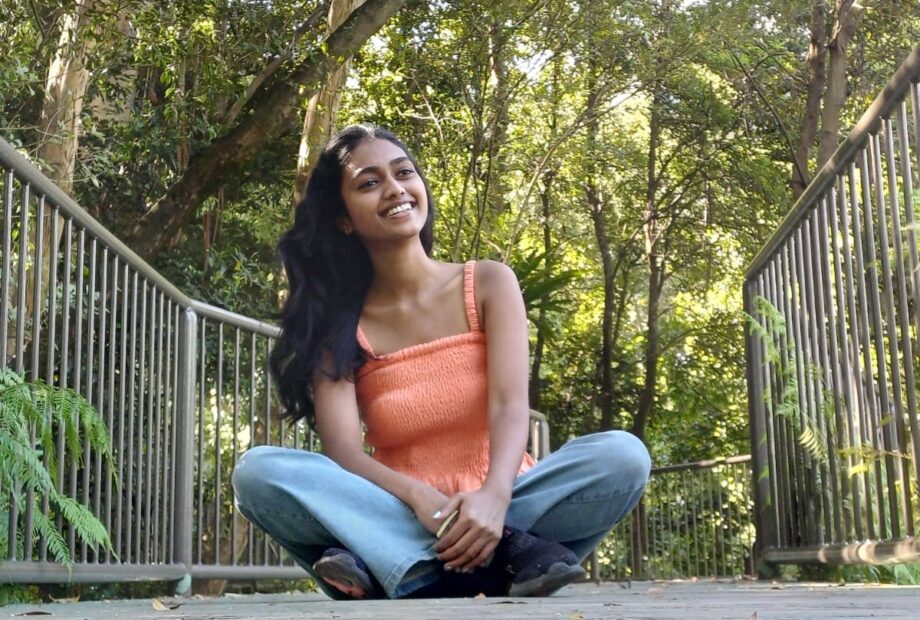
I am a 23-year-old science student, now pursuing my PhD at the University of Exeter under the NERC GW4+DTP scholarship. My journey as a researcher began five years ago and has since spanned disciplines, institutions, and countries. Today, my work focuses on reconstructing the ancient South Asian monsoon and understanding how organisms responded to its past changes.
When I began my undergraduate studies at the Indian Institute of Science Education and Research (IISER) Kolkata, all I knew was that I wanted to become a researcher. I didn’t realise this journey would shape far more than my career. IISER gave me the freedom to explore every subject that fascinated me. My real passion for research ignited during my time at the Environmental Nanoscience Laboratory, where I spent a summer working on microplastics in 2022. That hands-on experience opened my eyes to how much discovery lies at the intersection of fields.
Over the next few years, I interned with five different labs across India and abroad. Some people, including mentors I admired, advised me to “settle down” in a single lab and focus on one topic. But I chose curiosity instead of convention. Exploring widely showed me that everything in science is connected and that the early years of research are meant for exploration. In a field as interdisciplinary as Earth Science, this freedom was a gift.
Yet, beyond academic milestones, there was another side to my story, one I rarely spoke about. Living away from home for long stretches, missing family events, and adjusting to new environments took a quiet toll. My first time abroad, living alone, came with challenges I wasn’t prepared for. Friends and family often told me, “You’re living the dream life,” but behind those words were moments of isolation, excruciatingly painful menstruation, and occasional fainting spells that made even fieldwork, something I loved deeply, feel impossible at times.
When I was selected for the Future Research Talent (FRT) Award at the Australian National University (ANU) for my master’s thesis, I wasn’t sure my body and mind were ready for another big change. But it turned out to be one of the best decisions of my life. The FRT program gave me not only a platform for research but also a community of incredible peers from India and Indonesia. Surrounded by experienced, supportive researchers, I felt my ideas were heard and valued. For the first time in a long while, I felt part of a team where I could both learn and belong.
During my months at ANU, I began caring for myself again, eating well, training calisthenics and building strong friendships. By the time I returned to India, the health issues that had once held me back had begun to fade. I felt stronger, both physically and emotionally.
Soon after submitting my thesis, I moved to the UK to begin my PhD at Exeter. It’s been another transition, another chance to grow. The lessons from my past, especially about seeking help, building community, and taking care of myself continue to guide me as I navigate this new phase.
Through all these experiences, I’ve learned that the pursuit of science isn’t only about experiments or results. It’s also about resilience, the courage to keep searching even when the path is uncertain, and the strength to care for yourself along the way.
Perhaps that’s the most meaningful discovery I’ve made so far.